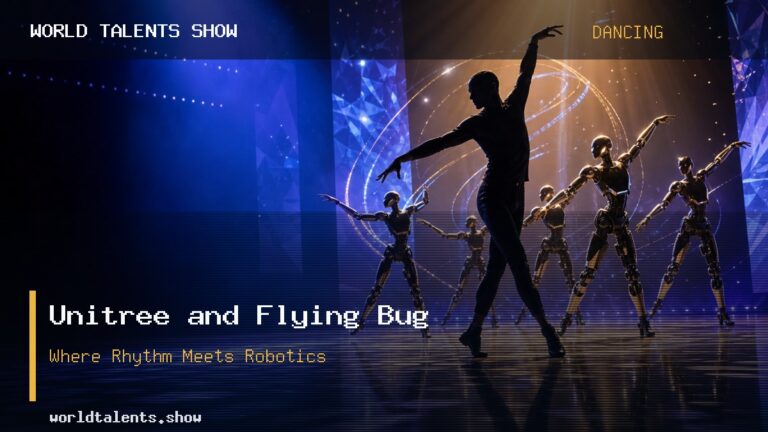
Unitree’s America’s Got Talent 2026 final performance is worth attention because it treats robotics as part of an ensemble rather than as a separate demonstration. The official AGT video centers on humans and robots sharing the stage, placing mechanical accuracy beside the responsive presence of live dancers.
That contrast gives the act its character. The robots bring a distinctive physical vocabulary to the routine, while the human performers provide the scale, rhythm and theatrical connection that help turn coordinated movement into a dance presentation. It is a performance about collaboration as much as technology.
Watch the Performance
Performance Recap
Unitree appeared in the final of America’s Got Talent 2026 with a mixed human-and-robot performance. As identified by the official video title, the routine brings dancers together with robots on the AGT stage rather than presenting the machines in isolation.
The performance follows Unitree’s earlier appearances in the season. The act received Sofía Vergara’s Live Golden Buzzer during the quarterfinals, which sent it directly to the final. That route made the final appearance the culmination of a season-long idea: using a talent-show stage to frame robotic movement through choreography.
Although the technology is naturally part of the attraction, the final’s basic proposition is theatrical. The audience is invited to read the stage picture as an ensemble: people and humanoid machines operating within the same musical and visual space.
Why It Stands Out
In dance, synchronization is not simply about several performers reaching the same position at the same time. It also involves matching the energy of an entrance, controlling the shape of a formation and making transitions feel intentional. A human-and-robot routine adds another layer to that challenge because the contrast in bodies is impossible to ignore. The point is not to make the robots seem human; it is to use their different movement quality as part of the choreography.
That distinction is important. Human performers can make tiny adjustments in spacing, timing and emphasis as a routine unfolds. A robot’s role is more visibly structured, which can make each repeated gesture and shared cue feel especially deliberate. When the two are staged together, the choreography has to account for both forms of motion. Clean timing matters, but so do safe spacing, readable pathways and a clear focus for the viewer.
The act also works through contrast. Human dance often communicates through individual texture: a change of weight, a pause, a turn of the head or a shift in intensity. Humanoid robots introduce a more articulated, engineered silhouette. Set side by side, those approaches create a visual conversation between fluid interpretation and programmed precision. That is a meaningful dance idea, not merely a technology showcase.
Unitree’s official robotics materials describe its G1 humanoid platform as a system built around multiple joint motors, a broad range of movement and continuing software development. Those capabilities offer useful background for why a televised routine is demanding. A stage number requires movement to be planned for rhythm and visibility, not just executed as a technical demonstration. The human collaborators, choreography and production design remain essential to making that work legible as entertainment.
Performance Context
America’s Got Talent is designed to place very different disciplines in direct comparison, from vocal performance and dance to magic, comedy and variety acts. Unitree entered that setting with a format that crosses categories: robotics supplies the medium, but choreography provides the performance language.
The Live Golden Buzzer from Sofía Vergara gave Unitree a direct route from the quarterfinals to the 2026 final. That context matters because it shows that the act was not presented as a one-off audition novelty. Its return to the final gave the team the opportunity to develop its central image on a larger competitive stage: humans and humanoid robots moving as one production.
The final should not be read as a broad claim about what humanoid robots can do in every unscripted environment. A televised performance is carefully designed, rehearsed and presented under controlled conditions. That does not diminish the achievement. It clarifies where the craft lies: translating technical capability into a concise routine with a clear audience-facing purpose.
WTS Editorial Take
Unitree is most compelling when viewed as an ensemble act rather than a contest between people and machines. The human dancers are not background decoration for the robots, and the robots are not simply props for the dancers. The appeal comes from the deliberate tension between the two: one group invites us to notice expression and adaptation, while the other makes rhythm and repeatability visible in a different way.
For a dancing category, that makes this performance more interesting than a sequence of isolated technical feats. The strongest idea is the shared frame. Choreography organizes bodies in relation to music, space and one another; Unitree extends that principle to an unusual mixed cast. The result asks viewers to think about timing as both an artistic choice and an engineering challenge.
There is also a welcome restraint in recognizing the team effort behind the concept. A polished human-robot routine depends on performers, choreographic planning, technical preparation and stage management. The final’s value is not that it predicts a future in which machines replace dancers. It is that it demonstrates a present-day performance format in which technology can support a distinctive piece of live visual storytelling.
About the Performer
Unitree is a robotics company known for developing legged and humanoid robots. Its official product information describes the Unitree G1 as a humanoid robot platform with 23 to 43 joint motors, depending on configuration, and an emphasis on movement flexibility and software-led development.
On America’s Got Talent, Unitree is presented as a collaborative stage act involving robots and human performers. The group’s 2026 run included an audition, a quarterfinal appearance and a place in the final after receiving Sofía Vergara’s Live Golden Buzzer.
Video Source & Credit
Original video: “Unitree Brings Humans And Robots Together For A SPELLBINDING Performance | The Final | AGT 2026.”
Official publisher/channel: America’s Got Talent.
Supplied canonical YouTube URL: https://www.youtube.com/watch?v=hwV561PU4Ho
This is an independent WTS editorial article. The embedded video, performance footage and associated program materials are credited to their respective owners and the official publisher.